Most people associate truffles with November fog and white-truffle prices that make your eyes water. But there's a quieter season here in the Niccone Valley — one that starts as the wildflowers fade and the wheat turns gold, when the oak forests just beyond Casa Luna's terrace are hiding something just as remarkable underground. This is black summer truffle season, and it's one of the valley's best-kept experiences for guests who know to ask.
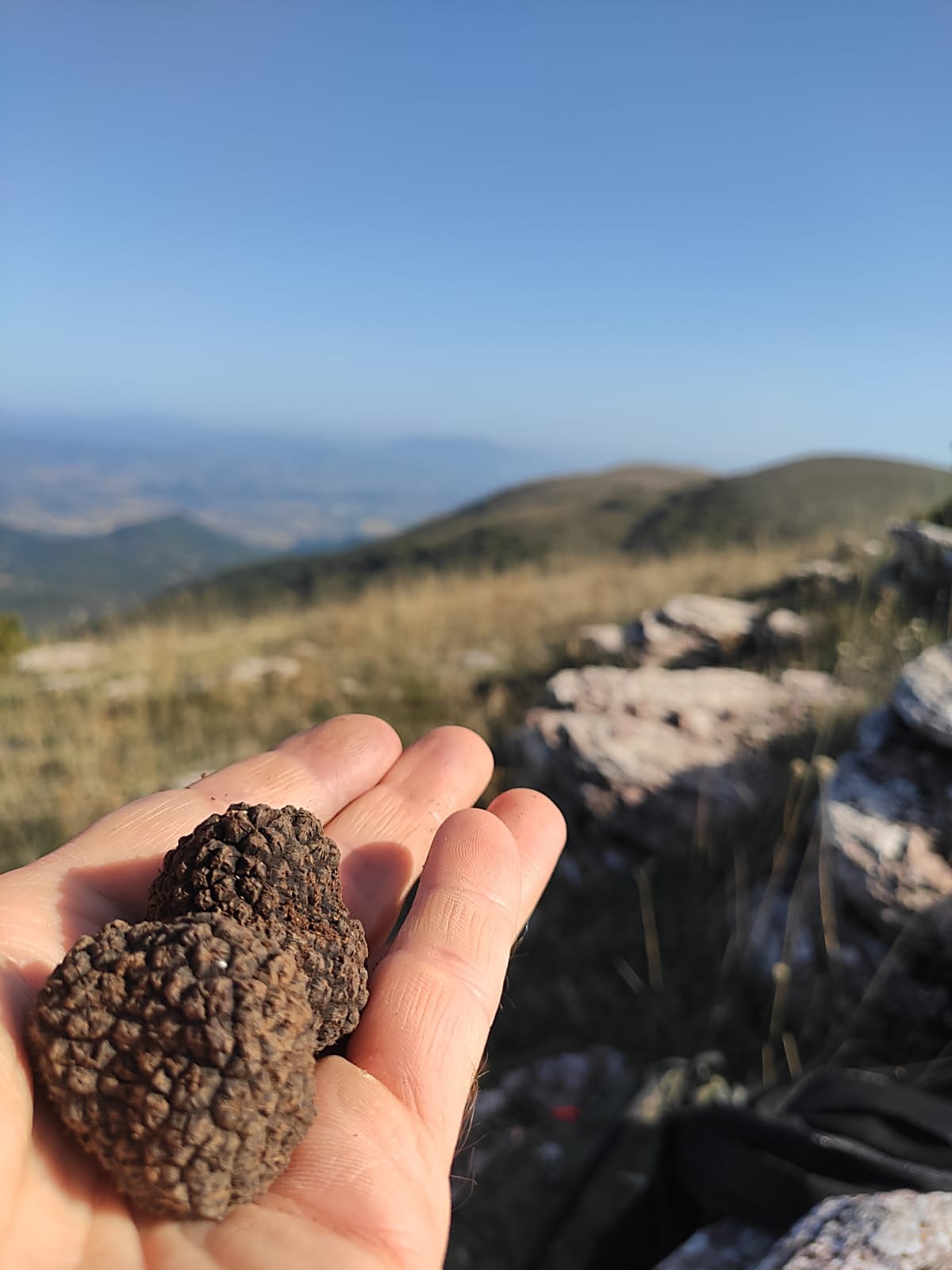 A morning's find — black summer truffles fresh from the Niccone Valley's oak and hazel woodland
What Exactly Is a Black Summer Truffle?
The truffle you'll find in the Niccone Valley from late spring through summer is Tuber aestivum — known locally as scorzone, from scorza, meaning "thick skin." It's a different species entirely from the famous Tuber melanosporum that dominates Umbria's winter months, and different again from the prized white truffle, Tuber magnatum, that draws collectors north each autumn. Where the winter black truffle has a dark, marbled interior and an intense, almost musky aroma, the summer truffle's flesh is lighter — a warm hazelnut-beige — and its flavor is gentler: earthy and mushroom-forward rather than pungent.
That gentler character is exactly why summer truffles work so well for a first truffle experience. They're approachable in a way winter black truffles aren't; you don't need to acquire a taste for them the way some visitors do with the more aggressive winter varieties. It's also, frankly, why they're a fraction of the price — you can enjoy a genuinely excellent truffle lunch here in July without the sticker shock of a December white-truffle dinner in Alba.
Species: Tuber aestivum (local name: scorzone) · Season: Roughly June through August, with some finds into early autumn
Flavor: Mild, earthy, mushroom-forward — noticeably gentler than winter black or white truffle
Where they grow: Symbiotically with oak, hazel, and holm oak trees, usually just beneath the surface
Why the Niccone Valley Grows Such Good Ones
Truffles aren't randomly scattered through Umbria's countryside — they're deeply particular about soil, tree partners, and microclimate, which is why some valleys produce exceptional truffles and neighboring ones produce almost none. The Niccone Valley checks every box. Its calcium-rich soil, its mix of oak, hazel, and holm oak woodland climbing the hillsides, and the particular rhythm of dry summer days followed by cool nights all combine to make this one of the more productive — and less discovered — truffle landscapes in central Italy. Unlike the well-trodden truffle country around Norcia or San Miniato, the Niccone Valley still feels like a local secret, which is part of what makes hunting here special.
Truffles form a mycorrhizal relationship with their host tree, essentially trading minerals and water drawn from the soil for sugars produced by the tree's roots. That relationship is invisible from above ground — there's no mushroom cap poking through the leaf litter to give the game away. Which is exactly why you need a very good nose to find one.
Why Dogs, Not Pigs
If your mental image of truffle hunting involves a pig rooting through the forest, it's time for an update — in Italy, virtually all truffle hunting today is done with dogs, not pigs. Pigs have a genuinely superior sense of smell for truffles, but they also have a genuinely superior appetite for eating what they find before the hunter can stop them, which makes them a liability rather than a partner. Dogs, trained from puppyhood, learn to locate the scent and then wait — pawing gently at the ground to mark the spot rather than digging in and devouring the prize.
A licensed local truffle hunter, called a tartufaio (or in the old Umbrian dialect, trifolao), works these woods with one or two trained dogs, often a breed like the Lagotto Romagnolo bred specifically for the job. Watching a good dog work is genuinely fascinating — a purposeful trot through the undergrowth, a sudden stop, a few seconds of focused sniffing, and then that telltale scratch at the earth. The hunter moves in with a small hooked spade, called a vanghetto, and carefully lifts the truffle free without damaging the surrounding root system — the hole is always refilled afterward, both out of respect for the tree and because a healthy root system is what produces next year's crop.
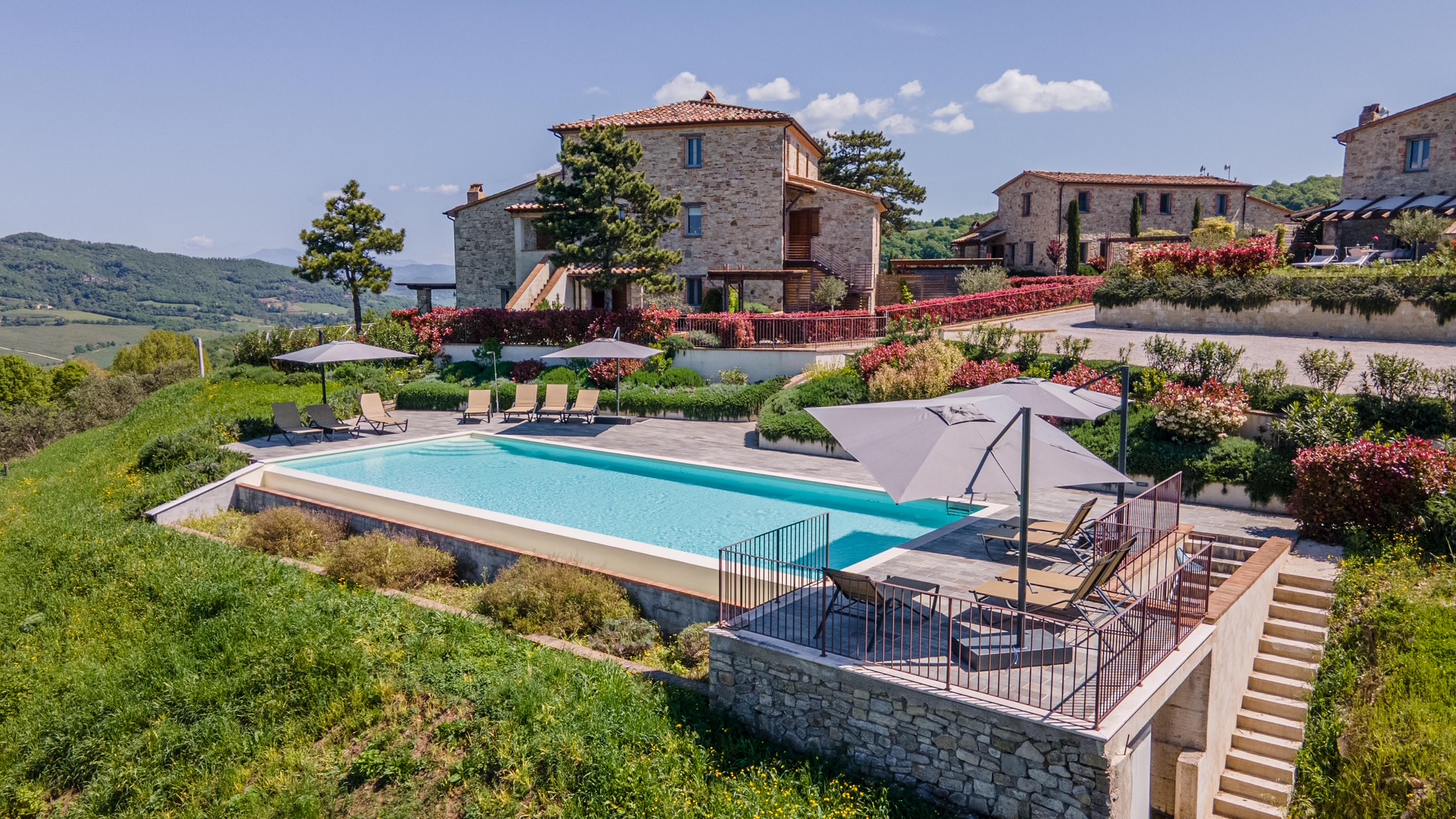 The oak-dotted hillsides visible from Casa Luna's terrace are prime scorzone territory
What an Actual Hunt Looks Like
A summer truffle hunt is a different experience from what most people imagine when they hear the phrase "truffle hunting." There's no misty November forest, no rubber boots squelching through mud. Instead, hunts typically set off in the cooler part of the morning, before the summer heat builds, through dry, sun-dappled woodland that feels more like a countryside walk than an expedition. Sneakers are genuinely fine; a hat and water are more useful than boots.
Guides look for particular signs before they even release the dogs — patches of bare, slightly scorched-looking ground beneath oak and hazel trees, where the truffle's growth actually suppresses surrounding vegetation, is one of the classic tells experienced hunters watch for. Once the dog picks up a scent trail, finds tend to come quickly; a productive morning might turn up four or five truffles within an hour or two of walking, each one dug, brushed clean, and passed around for everyone to smell while it's still warm from the earth.
Most hunts end the way any good Umbrian outing should: at a table. A typical experience includes a rustic lunch afterward where the truffles found that morning are shaved fresh over housemade pasta, egg dishes, or local cheese — the single best way to actually understand what makes a fresh truffle worth the fuss, since so much of its aroma is lost within days of being dug.
Wild Foods Italy runs a family hunt out of nearby Pettino with trained dogs and a traditional Umbrian lunch featuring pasta and local wine — from around €150 per adult. It's an easy add-on for a Casa Luna stay and one we recommend to guests regularly.
Cooking and Eating Them
Because their flavor is milder than winter black or white truffle, black summer truffles reward simple treatment rather than heavy sauces that would overpower them. Thin shavings over warm buttered tagliatelle, a soft scrambled egg, or a wheel of fresh pecorino let the truffle's earthy, faintly hazelnut character come through without needing much else. Locally, you'll also see them worked into a compound butter, folded into a simple bruschetta with good olive oil, or paired with the region's other summer star — fresh burrata, where the mild creaminess and the truffle's understated funk complement each other rather than compete.
One practical note if you bring truffles home from a hunt: they don't keep the way you'd hope. A summer truffle is genuinely best eaten within a few days of being dug, wrapped loosely in paper towel and stored somewhere cool. The aroma that makes them worth the trip fades quickly, so resist the temptation to save them for a special occasion back home — the special occasion is now.
Planning a Hunt from Casa Luna
Because the valley's own woodland is genuinely productive truffle ground, several local operators run hunts within a short drive of the property, and a few — including the Wild Foods Italy experience above — can be arranged with a few days' notice. We're happy to help coordinate timing around your stay; ask Luna, our AI concierge, or reach out to us directly and we'll put you in touch with a trusted local guide.
The ideal plan is a mid-morning start — early enough to beat the summer heat, but not so early that you're stumbling around in the dark the way a winter hunt requires. Two to three hours covers a hunt plus lunch comfortably, which leaves the rest of the day free for the pool, a swim in the Nestore river, or an afternoon exploring one of the valley's hill towns. It also pairs beautifully with a visit to I Girasoli di Sant'Andrea, the valley's own winery just down the hill, for an evening of wine tasting after a truffle-scented lunch — a genuinely full Umbrian day, all within a few minutes of your terrace.
The Bottom Line
Black summer truffles will probably never get the reputation — or the price tag — of their white and winter-black cousins, and honestly, that's part of their charm. They offer everything that makes truffle hunting magical — the dogs, the ritual of the dig, the lunch that follows — without requiring you to visit in the cold, dark months or pay a small fortune for the privilege. If you're staying at Casa Luna between June and August, a morning in the oak woods just up the hill is one of the more memorable, least crowded ways to spend a few hours in Umbria. Ask us to help arrange one — the valley's forests are waiting.